The name Jeannine Belleguic has attracted online attention from readers looking to understand her background, family connections, and personal history. Unlike celebrities whose lives are documented through interviews, public appearances, and professional achievements, Jeannine Belleguic is associated primarily with French civil records, family information, and memorial notices.
The available records connect her to Quimperlé, a town in Brittany, France, and identify her birth surname as Bleuzen. They also provide important information about her later life and passing in April 2025. However, many aspects of her personal story remain outside the public record.
Understanding Jeannine Belleguic requires separating documented information from speculation. Numerous online biographies may offer detailed narratives, but not every claim has independent supporting evidence. A reliable account should explain what is known, acknowledge what remains uncertain, and respect the privacy of the individual concerned.
This article explores Jeannine Belleguic’s identity, family background, connection to Brittany, available biographical records, and the reasons her name continues to interest online readers.
Who Was Jeannine Belleguic?
Jeannine Belleguic was a French woman whose documented history is closely associated with Quimperlé in the Finistère department of Brittany. Publicly available civil and funeral information identifies her as Jeannine Belléguic, née Bleuzen, connecting the surname she used later in life with her birth family.
In French, the word née means “born” and is commonly used in formal notices to identify a woman’s maiden name. This detail helps explain why different versions of her name appear in online searches.
According to available death-record information, Jeannine was born on May 28, 1931, in Quimperlé and died on April 18, 2025, in Lorient, France, at the age of 93. A funeral notice provides additional information about her family and funeral arrangements.
These details establish a basic outline of her life without suggesting that every part of her biography is known.
Jeannine’s story is best approached as that of a private individual whose life is preserved through family and community records rather than a widely documented public career. This distinction matters because the number of websites discussing a person does not necessarily indicate the extent of their public recognition.
Jeannine Belleguic Biography at a Glance
The following table summarizes the principal details available from public biographical and memorial sources.
| Detail | Information |
|---|---|
| Name | Jeannine Belleguic |
| Name appearing in French records | Jeannine Belléguic |
| Birth surname | Bleuzen |
| Full birth name reported in records | Jeannine Joséphine Annick Bleuzen |
| Date of birth | May 28, 1931 |
| Birthplace | Quimperlé, Finistère, France |
| Nationality | French |
| Regional connection | Brittany, France |
| Date of death | April 18, 2025 |
| Place of death | Lorient, Morbihan, France |
| Age at death | 93 |
| Profession | Not reliably established |
| Public profile | Primarily documented through family and memorial records |
These details should be understood in context. Civil records are useful for confirming dates and identity, while funeral notices provide information about family relationships and arrangements. Other personal details require separate verification before they can be included as established facts.
Early Life and Background in Brittany
Growing Up in Quimperlé
Quimperlé is a town in western France, located in Brittany, a region with a distinct cultural identity and a long history of local traditions. The town provides the clearest documented geographical connection in Jeannine Belleguic’s biography.
Her recorded birthplace places the beginning of her life in this Breton community in 1931. She was born during a period when France was experiencing significant social and economic changes, although no reliable personal account establishes how those wider circumstances specifically shaped her childhood.
It is important to distinguish regional history from individual experience. Knowing where someone was born can help readers understand their geographical background, but it cannot tell us exactly what their childhood was like, which schools they attended, or what ambitions they held.
There is no sufficiently detailed, independently verified account of Jeannine’s early years to reconstruct those experiences accurately.
Her Birth Name and Family Identity
The relationship between the names Bleuzen and Belléguic is one of the clearest elements of her documented identity.
The birth surname Bleuzen appears in records identifying Jeannine, while the surname Belléguic is used in later-life and funeral information. Both forms are useful when researching her history because searching only one spelling may produce incomplete results.
Her full birth name is reported as Jeannine Joséphine Annick Bleuzen. This longer form helps distinguish her from other people with similar names and makes it easier to connect records that refer to her at different stages of life.
For family-history research, these naming details are more than a technical matter. They provide a link between a person’s birth identity and the name used in subsequent records.
Family Life and Personal Relationships
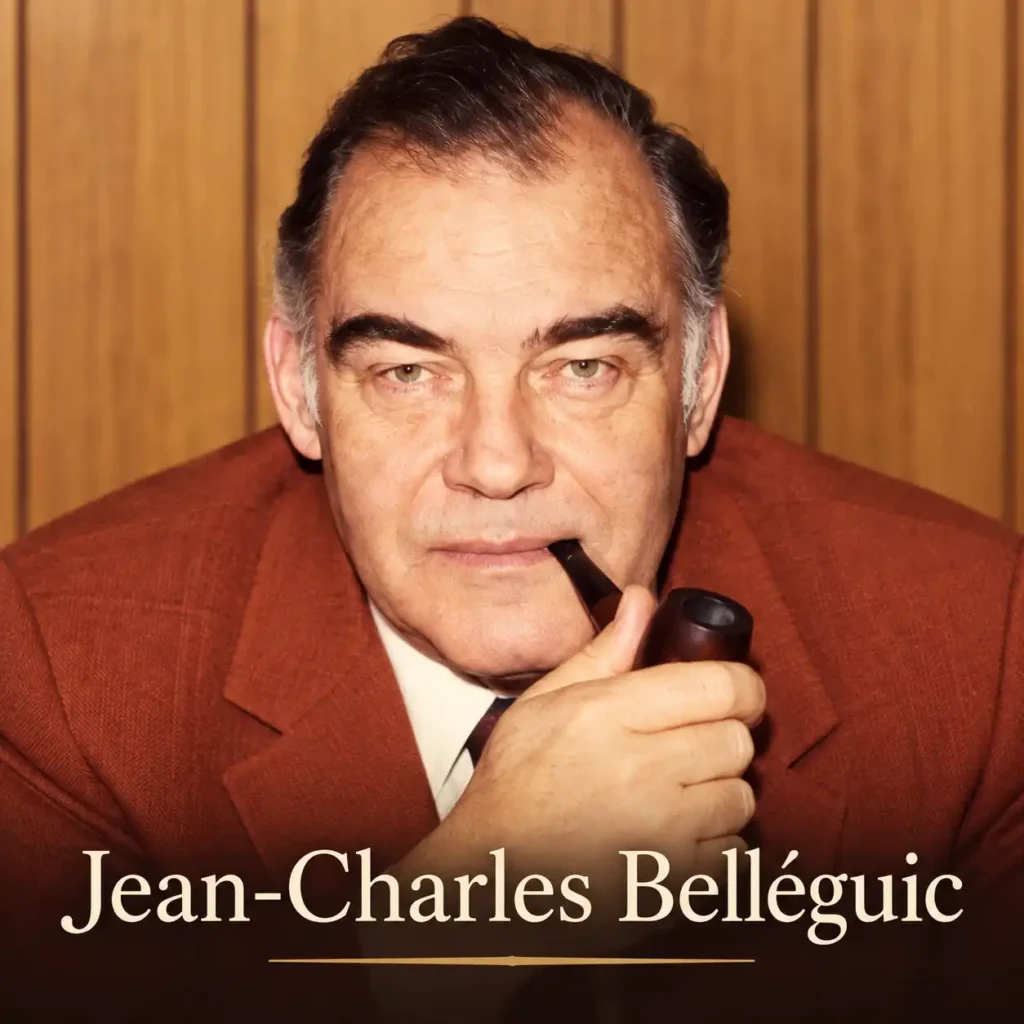
Family information forms an important part of the public record surrounding Jeannine Belleguic. Although detailed accounts of her private life are limited, family and genealogical sources identify her as the wife of Jean-Charles Belleguic and name three children: Gilles, Catherine, and Pierre-Yves. The available family notice also refers to grandchildren and great-grandchildren.
Marriage to Jean-Charles Belleguic
Jeannine’s connection to Jean-Charles Belleguic is reflected in the formal wording of her funeral announcement, which identifies her as Madame Jean-Charles Belléguic, née Jeannine Bleuzen.
This wording links her married surname to her birth name and helps explain how the two names relate to one another.
Beyond this documentary connection, publicly available sources provide limited independently verified information about their relationship. A precise marriage date, a detailed account of their life together, and personal recollections have not been established by the strongest sources reviewed for this article.
A responsible biography should avoid inventing romantic anecdotes or presenting assumptions about a couple’s relationship as historical facts. Their documented family connection is meaningful in its own right.
Children and Later Generations
Family-history information identifies three children associated with Jeannine and Jean-Charles: Gilles, Catherine, and Pierre-Yves. The memorial information also refers to six grandchildren and ten great-grandchildren.
These multigenerational connections offer a glimpse into the family network associated with her life. They also help explain why funeral notices can be valuable sources for researchers interested in people who did not have extensive public profiles.
Family notices often preserve names and relationships that might otherwise be difficult to find in online searches. They can provide a starting point for tracing generations, connecting surnames, and locating additional records.
However, the existence of a family record does not reveal the private experiences behind it. Without reliable interviews or personal accounts, it would be inappropriate to assign specific family traditions, values, or memories to Jeannine.
What Was Jeannine Belleguic’s Profession?
One of the most frequently encountered questions about Jeannine Belleguic concerns her occupation. Despite the growing number of online articles about her, her profession has not been reliably established by the strongest publicly available records reviewed for this article.
Civil and funeral records provide information about her identity, family connections, and important dates. They do not establish a detailed employment history, educational background, or professional résumé.
Some online biography pages have associated her name with psychology or neuropsychology. However, these claims lack the independent corroboration needed to present them as confirmed facts.
Why Career Claims Need Verification
A credible professional biography normally draws on evidence such as:
- Official employer biographies or institutional profiles.
- University records and verified academic qualifications.
- Professional registrations or recognized directories.
- Published research, books, or other attributable work.
- Reliable newspaper profiles or documented interviews.
Without such evidence, a specific job title remains uncertain.
This does not mean Jeannine never had a professional career. It means the information available for this article does not establish what that career may have involved.
The distinction is important for readers seeking accurate information. A detailed claim can sound convincing without being true, particularly when multiple websites repeat the same unsupported description.
For that reason, Jeannine Belleguic’s occupation should be described as unconfirmed rather than filled in with assumptions.
Education and Professional Achievements
Information about Jeannine Belleguic’s formal education is similarly limited. The available records reviewed for this article do not reliably identify the schools she attended, any university degrees she earned, or specific professional qualifications she may have held.
It would be misleading to infer her educational background from claims about an alleged career that has not itself been independently verified.
The same caution applies to awards, business ownership, published work, and public achievements. No substantial, independently corroborated professional record has been established in the sources reviewed.
There is an important difference between saying that an achievement is undocumented and claiming that it never happened. Public records rarely capture every aspect of a private person’s life, especially someone whose life was not extensively covered by the media.
Jeannine may have had skills, interests, responsibilities, and accomplishments that were important to her family without generating a significant public record. The available evidence simply does not provide enough detail to describe them accurately.
A trustworthy biography recognizes these limitations instead of turning gaps in the record into an invented life story.
Jeannine Belleguic’s Later Years
Jeannine’s later life is documented primarily through family and memorial information. The available records connect her story with Quimperlé and Lorient, two locations in Brittany and the surrounding region of western France.
Beyond these geographical and family details, the public record offers only a limited account of her daily life in her later years.
There is no sufficiently reliable information to establish a detailed timeline of her residences, routines, personal interests, or community activities. It would therefore be inappropriate to portray her as having followed a particular lifestyle or to attribute specific hobbies to her without supporting evidence.
Nevertheless, the surviving records illustrate an important aspect of family history: not every life is preserved through published interviews or professional achievements. Some lives are documented mainly through official records, relationships, and the announcements made when a person passes away.
For families researching their ancestry, these sources can still hold considerable value. A date, surname, or place of residence may help connect different branches of a family tree or lead to additional historical documents.
In Jeannine’s case, these records provide a useful foundation while leaving many personal details private.
Death and Funeral of Jeannine Belleguic
Jeannine Belleguic died on April 18, 2025, at the age of 93. Available civil-record information places her death in Lorient, in the Morbihan department of France. Her funeral was held on April 25, 2025, in Quimperlé.
Funeral Arrangements and Memorial Records
The funeral announcement is an important source for understanding the final chapter of Jeannine’s documented life. It connects her name with her birth surname, identifies family relationships, and records the arrangements made in her memory.
Such announcements serve a purpose beyond communicating practical information. They preserve a record of a person’s passing and recognize the family members and loved ones associated with their life.
For people researching Jeannine Belleguic, the funeral notice offers information that may be difficult to find elsewhere. It provides a starting point for understanding her identity and family connections without requiring speculation about her private experiences.
The notice also demonstrates why original records matter. When several websites publish similar information, the underlying civil record or family announcement is generally more useful than another article repeating the same details.
Why Is Jeannine Belleguic Being Searched Online?
The increasing visibility of Jeannine Belleguic’s name reflects a broader pattern in online biography searches. Once a name appears in an indexed obituary, genealogy record, or memorial notice, it can become the subject of additional articles and search queries.
Readers may discover the name while researching French family history, looking for information about a particular surname, or trying to understand a person’s relationship to a family.
The Role of Search Engines and Biography Websites
Search engines make it possible to discover information about people who may never have been public figures. At the same time, the presence of numerous biography pages can create the impression that a person has a widely documented public history.
That impression can be misleading.
In Jeannine’s case, the strongest available evidence primarily concerns her identity, family connections, dates, and funeral arrangements. More elaborate claims about her profession and personal achievements require independent verification before they can be accepted as factual.
For readers, the best approach is to examine the quality of the evidence rather than the number of search results.
A useful question is whether an article provides an identifiable original record, an institutional source, or a reliable publication that independently confirms its claims. If it does not, its more detailed statements should be treated cautiously.
What Can We Learn From Jeannine Belleguic’s Story?
Researching Jeannine Belleguic highlights several useful lessons about biography writing and family history.
First, names need context. Her appearance under both Bleuzen and Belléguic illustrates how birth surnames and later-life names can affect searches and genealogical research.
Second, reliable records matter more than repetition. Multiple websites repeating a claim do not necessarily provide multiple independent confirmations. The underlying evidence remains essential.
Third, privacy deserves respect. When a person’s life is not extensively documented, the absence of information should not become an invitation to invent personal details, career achievements, or family stories.
Finally, a meaningful life does not have to be accompanied by public recognition. Civil records and family notices can preserve important information about someone whose experiences were largely private.
For TheGlobalEdit readers, this is a reminder that good biography writing involves both research and restraint. The goal is not to make every life sound extraordinary but to explain the available facts accurately and respectfully.
Frequently Asked Questions About Jeannine Belleguic
1. Who was Jeannine Belleguic?
Jeannine Belleguic was a French woman associated with Quimperlé in Brittany. Public records identify her birth surname as Bleuzen and provide information about her family and death in 2025. She is primarily documented through civil, family, and memorial records.
2. What was Jeannine Belleguic’s birth name?
Her birth name is reported as Jeannine Joséphine Annick Bleuzen. French funeral information uses the form Jeannine Belléguic, née Bleuzen, connecting her birth surname with the name used later in life.
3. When was Jeannine Belleguic born?
Available civil-record information gives her date of birth as May 28, 1931, in Quimperlé, Finistère, France.
4. How old was Jeannine Belleguic when she died?
She was 93 years old when she died on April 18, 2025. Her recorded birth date and death date support this age.
5. Who was Jeannine Belleguic’s husband?
Family and funeral information identifies Jean-Charles Belleguic as her husband. Her funeral announcement connects his surname with her birth name, Bleuzen.
6. Did Jeannine Belleguic have children?
Available family information identifies three children: Gilles, Catherine, and Pierre-Yves. The memorial information also refers to six grandchildren and ten great-grandchildren.
7. What was Jeannine Belleguic’s profession?
Her profession has not been reliably established in the strongest sources reviewed. Online claims associating her with psychology or neuropsychology should not be treated as confirmed without independent evidence.
8. Where did Jeannine Belleguic die?
Available civil-record information places her death in Lorient, Morbihan, France, on April 18, 2025. Her funeral took place in Quimperlé on April 25, 2025.
9. Why do some records spell her name Belléguic?
The spelling Belléguic includes an accent on the first e, while Belleguic omits it. Both versions appear in online references. Searching both spellings, along with her birth surname Bleuzen, can help readers locate relevant records.
10. Is there a reliable estimate of Jeannine Belleguic’s net worth?
No reliable public estimate of her personal net worth has been established in the sources reviewed. Without verified financial information, assigning a monetary figure would be speculation.
Conclusion
Jeannine Belleguic’s documented story connects a long life in Brittany with family history, civil records, and remembrance. Although many personal and professional details remain unknown, the available evidence provides a meaningful outline of her identity and family connections. The most reliable way to understand her life is to respect the facts, acknowledge the gaps, and avoid turning unverified claims into biography.